
Is a Laser Technician Career Worth It in 2026? Pay, Demand & Job Security in Arizona
- Giselle Herrera
- Jun 25
- 7 min read

Last updated 06/25/2026
Reviewed by Mark Tafoya
One Question, Three Real Answers From Arizona's Laser Market
Three career-changers walked into Get Laser Certified's open house in Peoria in early 2026 with the same question: is this actually worth it? One was a dental hygienist from Mesa. One was a cosmetologist from Glendale. One was a warehouse supervisor from Surprise who'd never touched an aesthetic device in his life. By the time Giselle Herrera finished walking them through the Arizona market data — the pay range, the demand drivers, the regulatory landscape, the difference between online-only certifications and the real thing — all three enrolled.
Here's the case Giselle made that day, updated for the 2026 market.
/
Key Takeaways
Pay: Arizona aesthetic laser techs earn approximately $28–$35/hour ($58,000–$72,800/year full-time) before bonuses or commissions.
Demand: Phoenix-metro med spa density and state device-registration rules create a structural, non-discretionary hiring floor.
Job security: Hard-to-acquire hands-on skill plus regulatory requirements (ANSI Z136.3-2018, OSHA 1910.132) protect credentialed operators.
Training matters most: In-person, live-client training outperforms online-only certification for Arizona hiring and long-term advancement.
Entry cost: Programs start from $2,999 with a short payback period at entry-level wages.
What Laser Technicians Actually Earn in Arizona
Arizona aesthetic laser technicians earn approximately $28–$35 per hour based on Arizona market compensation data for licensed aesthetic practitioners. At 40 hours per week, that's a $58,000–$72,800 annual range for full-time employment — before any commission, production bonuses, or tips that some med spas add on top of base hourly rates.
That range reflects hands-on trained, compliance-literate operators who can work unsupervised on a device. It is not the starting wage for someone who completed an online-only module and has never operated a laser on a live patient. The market knows the difference — and it prices accordingly.
The payback period on laser training — even at entry-level wages — is short. The career ceiling, for technicians who build experience and specialization, is considerably higher. Advanced operators who specialize in tattoo removal, skin resurfacing, or body contouring command the upper end of that range and beyond, particularly in the Scottsdale and Phoenix markets where premium med spas cluster.
Demand: Why Arizona Is One of the Best States for This Career Right Now
Arizona's market conditions for laser technicians in 2026 are as favorable as they've been. The state's consistent population growth — particularly in the West Valley cities including Peoria, Glendale, Surprise, and Goodyear — has driven new clinic openings. The Phoenix metro's med spa density is among the highest in the U.S., and the Scottsdale corridor alone has dozens of active aesthetic practices hiring for laser roles.
The Arizona Department of Health Services (ADHS) Bureau of Radiation Control creates a structural demand floor that doesn't exist in less-regulated states. Every clinic operating a laser device must have a registered device and a trained operator. You cannot staff a laser room with an untrained hire and stay compliant. That means as long as clinics have devices — and they're investing heavily in them — they need trained people to operate those devices.
This isn't a soft demand indicator like "wellness is growing" or "people want to look good." It's a hard, enforceable requirement enforced by a state regulatory agency. That's a different kind of job security.
Job Security: What "Stable" Looks Like in Aesthetic Laser
Job security in any field comes down to three factors: is the skill genuinely hard to acquire, is the demand for it structural rather than discretionary, and does the regulatory environment protect credentialed practitioners? Aesthetic laser in Arizona scores well on all three.
Genuinely hard to acquire: Real laser competence — the kind that lets you read a client's skin in real time, adjust technique mid-treatment, and maintain a compliant documentation chain — is not downloadable. It is built in supervised, live-client training environments. Programs that provide this are finite in number and geography. Programs that only offer online theory modules are not producing the same outcome. The resulting skill gap is what keeps wages stable and employers paying a premium for qualified candidates.
Structural demand: ADHS registration, ANSI Z136.3-2018 LSO requirements, and OSHA 1910.132 PPE mandates all require trained human operators. These regulations don't relax during economic downturns or disappear when AI improves. They exist because laser devices are regulated Class IIIB and Class IV equipment operating near or on patients. No software replaces the operator accountability those regulations require.
Regulatory protection: Arizona has one of the clearer regulatory frameworks for laser operators in the country. The ADHS framework is established, and employers in the state are familiar with compliance requirements. That clarity is good for career-changers: it means the credential you earn actually maps to a defined employment role, not an ambiguous job category.
Arizona career-changers: the path is clearer than you think. Get Laser Certified's Peoria campus has helped career-changers from every background — cosmetology, nursing, retail, trades — make this transition. DM START to get a breakdown of what's included, what it costs, and when the next cohort starts.
Why the Hands-On Training Advantage Is the Career Advantage
"In the Arizona market right now, I can tell within the first five minutes of an interview whether someone trained hands-on or online-only," says Giselle Herrera, CLT, Marketing Lead and PMU Specialist at Get Laser Certified. "The hands-on graduates talk about their clients — specific treatment moments, how they handled a challenging skin tone, what they learned from their first IPL session. Online-only candidates talk about modules. Employers in Peoria, Scottsdale, and Mesa hire the first group every time."
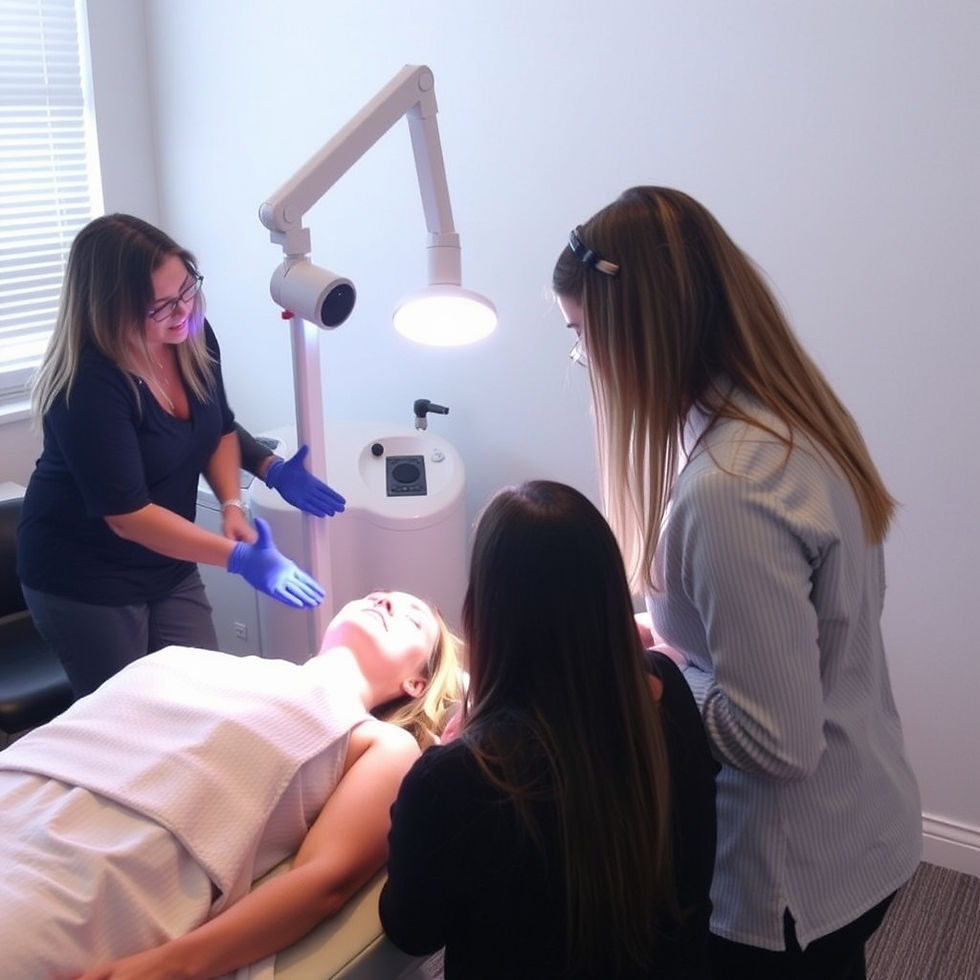
This is the career-worth-it test in 2026: not whether the field is growing (it is), not whether the pay is competitive (it is), but whether the training you choose gives you the clinical judgment that employers actually screen for. In-person training at a campus like Get Laser Certified — where students work on real clients, real devices, and real protocols from early in the program — builds that judgment. Online-only programs do not.
The difference shows up immediately in the job search. It shows up again two years in, when employers promoting from the laser tech role to senior tech or lead operator are looking for the person with the most documented, varied, hands-on experience. It is a compounding advantage.
Factor | In-Person Training (e.g., GLC) | Online-Only Certification |
Live-client hours | Supervised hands-on hours on real clients and devices | Theory modules only; no live-client practice |
Clinical judgment | Built through real treatments and skin-type variety | Limited; learned on the job after hire |
Employer preference (AZ) | Preferred in Peoria, Scottsdale, Phoenix, Mesa | Often screened out for hands-on roles |
Earning potential | Commands the $28–$35/hour Arizona range | Typically below the hands-on trained range |
What Career-Changers in Arizona Specifically Need to Know
Arizona is genuinely one of the better states to make this transition. Here's the specific landscape:
Geographic diversity of employers: Phoenix metro (including Peoria, Scottsdale, Glendale, Mesa, Chandler, Tempe, Surprise) plus Tucson and growing markets in Flagstaff and Sedona create a wide employment map without requiring relocation.
ADHS clarity: Arizona's regulatory framework is clearer than many states, which means the training-to-employment pathway is well-defined. You know what you need; employers know what they're looking at.
Training access: Get Laser Certified's Peoria campus at 9794 W. Peoria Ave #14 is centrally located for students commuting from the entire West Valley and accessible from Phoenix, Glendale, and Scottsdale within 30–40 minutes.
LSO pathway: The Laser Safety Officer designation under ANSI Z136.3-2018 is increasingly required or preferred by employers. Arizona clinics are compliance-aware, and graduating with an understanding of LSO requirements positions you ahead of candidates who don't have that training.
For a full breakdown of what the program covers, visit the classes page. For the compliance and LSO piece, the LSO pathway page has the relevant framework. When you're ready to ask about schedules and tuition, admissions is the place to go.
The 2026 Verdict: Worth It — With the Right Training
Is a laser technician career worth it in Arizona in 2026? The pay is real. The demand is structural. The job security is grounded in regulatory requirements that aren't going away. The market is favorable. The career ceiling for experienced, specialized operators is genuine.
But "worth it" depends heavily on the training you choose. An online-only certificate gets you theoretical knowledge. In-person training at a campus with live-client supervised hours, ADHS-aligned curriculum, and LSO preparation gets you the actual skill set that Arizona employers hire and retain. That's the difference between a credential on a resume and a career that pays $28–$35 per hour and grows from there.
The dental hygienist from Mesa, the cosmetologist from Glendale, and the warehouse supervisor from Surprise all made the same call. If you're at the same crossroads, DM START — or visit the Get Laser Certified admissions page to see what the next cohort looks like.
How much do laser technicians make in Arizona in 2026?
Arizona aesthetic laser technicians earn approximately $28–$35 per hour based on Arizona market compensation data for licensed aesthetic practitioners. Full-time employment at that range represents $58,000–$72,800 annually before any production bonuses or commissions. Actual earnings vary by employer, experience, and specialization. Get Laser Certified does not guarantee specific income outcomes.
Is laser technician in high demand in Arizona?
Yes — for hands-on trained, credentialed operators. The Arizona Department of Health Services (ADHS) Bureau of Radiation Control requires registered operators for all clinical laser devices, creating a structural, non-discretionary demand floor. The Phoenix metro's med spa market is among the densest in the U.S., with active hiring across Peoria, Scottsdale, Mesa, Glendale, and Chandler. The constraint is not demand — it's supply of genuinely qualified, hands-on trained techs.
Do I need a license to be a laser technician in Arizona?
Arizona's requirements for laser operators depend on treatment type and device classification. Arizona Department of Health Services (ADHS) Bureau of Radiation Control registration and compliance requirements apply to facilities and devices, and operators must maintain documented training records. Some treatments require medical supervision or specific credentials. Get Laser Certified's admissions team can walk you through current Arizona requirements for your specific career goals. This is not legal or licensing advice — verify current requirements with ADHS and relevant state agencies before operating any laser device.
What's the difference between online laser certification and in-person training in Arizona?
In-person training at a campus like Get Laser Certified includes supervised live-client hours on real laser devices, ADHS-aligned compliance curriculum, and hands-on development of the clinical judgment that employers screen for. Online-only certification programs typically cover theory and device knowledge without live-client hours. Arizona employers — particularly in Scottsdale, Phoenix, and Peoria — consistently prefer candidates with documented hands-on training. The practical skill set built in person is what commands the $28–$35/hour range in the Arizona market.
Is it worth becoming a laser technician as a career change?
For the right person with the right training, yes. The pay is competitive ($28–$35/hour in the Arizona market), the demand is structural (ADHS requirements maintain a hiring floor), the job security is strong relative to many service careers, and the entry cost through a program like Get Laser Certified (starting from $2,999) produces a short payback period. The key variable is training quality — in-person programs with live-client hours produce significantly better career outcomes than online-only alternatives.


Comments